
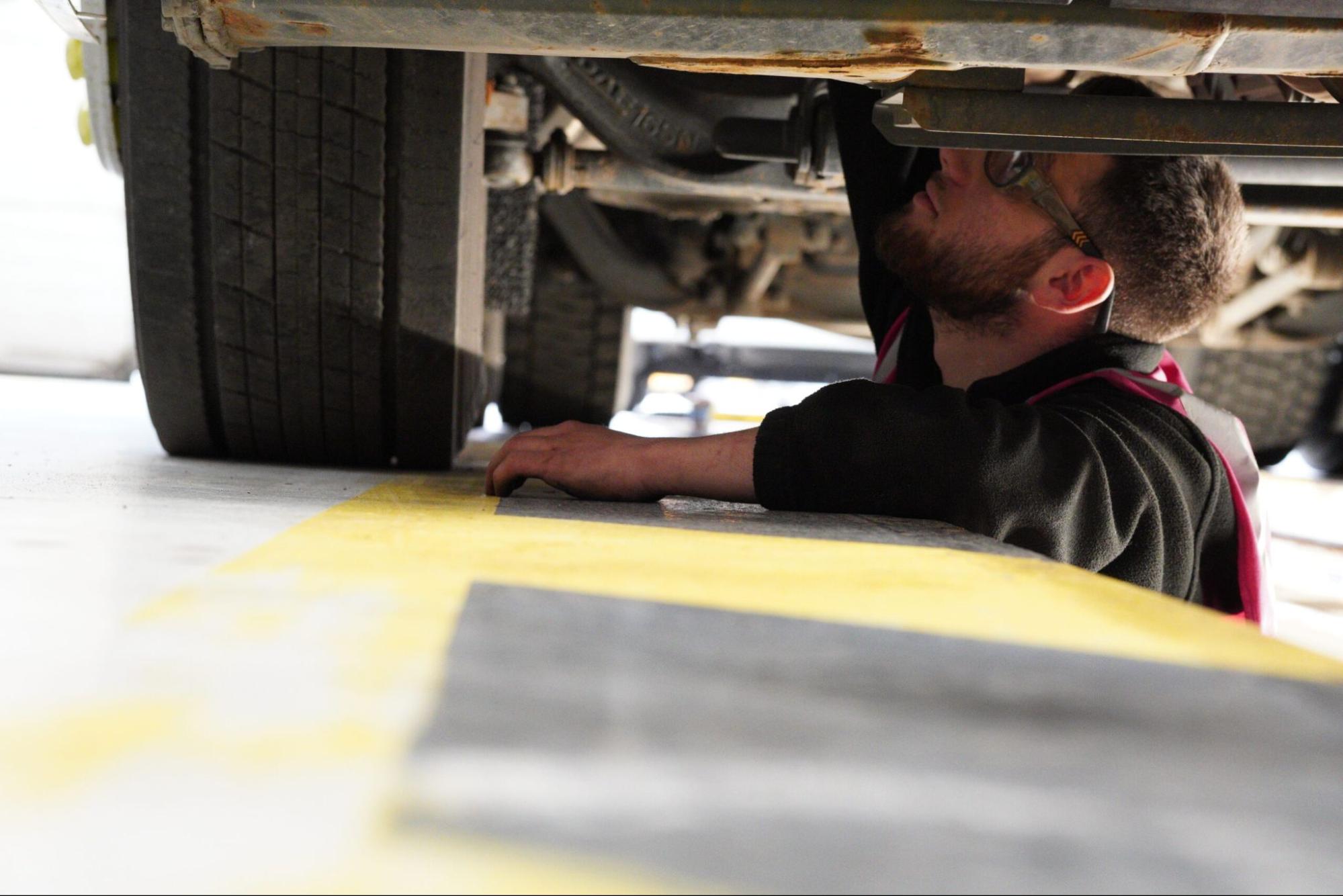
Summer brings its own set of challenges for commercial vehicle operators. And so far, this year has been a doozy. So, while winter is usually the time most maintenance issues come to light, long periods of high temperatures can be equally damning in more subtle ways, increasing wear on structural components, weakening protective coatings, and increasing the likelihood of an HGV MOT fail.
The good news is that most of these problems are preventable. You just have to stay on top of inspections and book in HGV bodyshop services as needed.
Is your HGV due its MOT? For more information about HGV MOTs or HGV bodyshop services, get in touch with Alltruck.

HGVs spend long hours on the road, often carrying significant loads. When it’s really hot, road temperatures can rise far above the surrounding air temperature, which puts stress on tyres, suspension systems, chassis components, and bodywork. In a period of high temperatures, joints, mountings, and protective coatings expand, contract, and age more quickly. Rubber components, adhesives, sealants and protective finishes also deteriorate more rapidly, impacting the overall health of the vehicle.
Although the chassis is built to withstand years of service, prolonged exposure to heat can mean that it deteriorates more quickly. Rubber suspension bushes and mounting points naturally lose flexibility as they age. High temperatures speed up this process by drying out the rubber, causing it to harden and develop small cracks. And as these components become less effective, vibration levels increase throughout the vehicle. The additional movement places extra strain on chassis joints, brackets and mounting points, leading to fatigue over time. If left untreated, these issues can develop into structural problems that can be problematic during an HGV MOT inspection.
Suspension systems rely on a combination of metal, rubber, and hydraulics. They work together to absorb constant impacts from the road.
During hot weather:
Taken together, this can accelerate wear that gradually affects handling, stability and component alignment. Poor suspension alone can increase stress across the entire vehicle.
Paintwork can easily be dismissed as a cosmetic or branding concern, but it can lead to more serious problems if left untended. High UV exposure gradually breaks down paint finishes, and when that happens, you lose that protective coating. Meaning that moisture can get to the metal beneath, causing corrosion.
If you notice this happening, a professional HGV bodyshop service can repair your paintwork to prevent structural damage.
Modern commercial vehicles use specialist sealants throughout the cab and body structure. Their role is to help prevent water ingress and support structural stability in certain areas. But again, in a heatwave, many sealants become brittle or shrink, which can cause small gaps to appear around panel joins, roof sections and body seams. Over time, these can allow water in and corrosion to happen.
Every metal panel expands slightly as temperatures rise. During the day, exposed bodywork can become extremely hot before cooling again overnight. When this happens, it can weaken a whole range of components, including:
This can impact how your doors and tail lifts work and cause leaks.
If your fleet also includes older vehicles that have undergone previous repair jobs, high temperatures can also expose these weaknesses. Paint mismatches become more noticeable. Repair edges may begin lifting. Body fillers can shrink. Sealants may separate. And adhesive bonding can weaken.
An HGV MOT is designed to confirm that a commercial vehicle remains safe and roadworthy. Body condition plays a part in that.
Depending on the nature and severity of the defect, issues that may affect the outcome include:
Many of these problems develop slowly rather than appearing suddenly. Regular vehicle inspections can help you to ensure that there are no nasty surprises when MOT time rolls around.
Unexpected MOT failures have a whole range of knock-on effects.
Preventative maintenance spreads repair work throughout the year, allowing bodywork issues to be corrected before they become urgent. It also makes workshop planning more predictable while helping you to ensure you have the right vehicle availability when you need it.
Many HGV fleet management operators associate HGV bodyshop services solely with accident damage. But they can actually play an important role in preventative maintenance.
Experienced technicians routinely inspect areas that may receive less attention during mechanical servicing, including:
Identifying early signs of deterioration means that repairs can be completed before serious problems develop. Helping you to extend vehicle lifespan while keeping your fleet compliant.
Rather than waiting for annual testing, it makes sense to include seasonal body inspections in your planned maintenance programmes.
A summer inspection provides an opportunity to identify the following:
Because a quick fix now is almost always cheaper than dealing with the fallout that comes from letting problems develop.
Passing an HGV MOT begins long before the vehicle enters the testing station. But that prep doesn’t end with routine servicing. Structural condition deserves equal attention. Especially in unusually hot or cold weather. When you identify heat-related deterioration early, you can correct minor defects before they escalate.
An MOT failure is always frustrating. But it’s even more so when you find out that the problem was avoidable. This summer has already been a difficult one to deal with, and it seems likely to continue that. way. Staying on top of preventative structural maintenance can keep your vehicles safe, your fleet on the road, and your customers happy, while potentially saving your business money.
For more information about HGV MOTs or HGV bodyshop services, get in touch with Alltruck.